Freitag, 6. Oktober 2023

 El president ucraïnès, Volodymyr Zelenskyi, assistint aquest dijous a Granada (Espanya) a la reunió de la Comunitat Política Europea, va intentar convèncer als alts representants dels països del continent, que si es produeix un congelament de la guerra a Ucraïna, Rússia tindrà l'oportunitat de reconstruir per a 2028 el seu potencial militar i podrà envair altres països, com les repúbliques postsoviètiques on es troben contingents militars russos o уls països bàltics. Segons V. Zelénskyi, les ambicions de Moscou són clares: apoderar-se d'un espai imperial encara major que el que té i impedir que Europa es converteixi en un espai de nacions lliures i democràtics, en resum, destruir la unitat europea.

Per a emfatitzar les seves afirmacions, el mandatari ucraïnès va afirmar que aquestes es basaven en informació precisa del seu servei d'intel·ligència. No hauria d'haver-ho fet, perquè no es pot dir que els serveis d'intel·ligència hagin actuat adequadament (per a no dir que van errar estrepitosament) en el cas d'aquesta invasió russa; en la vigília de la mateixa van negar la possibilitat que es produís, un cop començada van assegurar que duraria setmanes i enguany van predir que a l'estiu Ucraïna estaria a Crimea…

Més convincent, en qualsevol cas, va ser l'al·lusió a la seva recent visita als EUA, on va mantenir converses amb el President Joe Biden i amb congressistes de tots dos partits i cambres del Parlament (per a assegurar-se que l'ajuda a Ucraïna no dependrà del resultat d'eleccions). A diferència de la seva tradicional crida a ajudar a Ucraïna, perquè defensa la democràcia i la llibertat arreu del món, va exhortar a no trencar la unitat amb els EUA, que "recolzen plenament la defensa de la llibertat i comprenen que Rússia, així com altres enemics del nostre mode de vida, pretenen explotar els efectes de les tempestes polítiques per als seus propis fins. És important ara a Europa no amagar les nostres veles del vent, intentant esperar que passi la tempesta, sinó estar al costat dels Estats Units en aquests temps regirats".

Els mitjans espanyols van assenyalar que el cim se celebrava en un moment marcat pels dubtes sobre la unitat europea en el subministrament d'armes a Ucraïna, que per mitjà dels seus polítics ha contribuït, en certa manera, a aquests dubtes. El mateix president V. Zelenskyi, en el seu discurs davant l'Assemblea General de les Nacions , va parlar d'“alguns països que aparenten fer costat a Ucraïna i no ho fan de veritat”, amb el que ajuden, en definitiva, a Moscou.

En aquesta al·lusió es va reconèixer a Polònia, que havia insistit a no aixecar la prohibició d'importació de productes agrícoles ucraïnesos. Això sembla estrany, sent Polònia el millor aliat d'Ucraïna, però la veritat és que, quan van quedar bloquejats els ports ucraïnesos, es va facilitar el trànsit de cereals bloquejats a través de la Unió Europea. Però alguns traders es van aprofitar de la situació i van vendre els seus productes agrícoles a Polònia a baix preu. Segurament, en aquesta compravenda il·lícita estaven implicats agents de les dues parts, però els que van sofrir el perjudici van ser els pagesos polonesos. Això va permetre, a més, que Putin digués posteriorment que gairebé res del que havia de sortir dels ports va arribar als països pobres, sent aquests subministraments el principal argument per a crear el famós corredor de seguretat en la Mar Negra. No obstant això, les autoritats d'Ucraïna van preferir protegir els seus agrobarons i demandar a Polònia davant l'Organització Mundial del Comerç per violar la llibertat de comerç. Davant aquesta actitud poc amistosa, Polònia va decidir deixar de subministrar armes al país veí en guerra, al·ludint les seves pròpies necessitats de defensa. 

Quan una guerra es prolonga per molt de temps, la societat adapta la seva vida a ella i els que viuen del lucre s'aprofiten de qualsevol oportunitat sense cap remordiment.

El més ferm dels donants, els EUA, tampoc està lliure de dubtes. Diversos polítics d'alt rang han expressat la seva preocupació sobre la forma en què arriba l'ajuda al destinatari final, els defensors d'Ucraïna. 

Últimament, el *Viceconsejero de Seguretat Nacional de la Casa Blanca, Mike *Pyle, va enviar una carta a la Plataforma de Coordinació de Donants (amb còpia al primer ministre d'Ucraïna i l'Oficina del President) amb una llista de reformes que Ucraïna ha de realitzar per a continuar rebent ajuda militar. El document resumeix els canvis necessaris amb terminis per ordre de prioritat: 0-3 mesos, 3-6 mesos, un any i 18 mesos. És a dir, si Ucraïna no implementa les mesures pertinents dins dels terminis establerts, deixarà de rebre ajuda militar. 

Les reformes se centren en el funcionament dels Consells de Supervisió de les empreses estatals, els organismes anticorrupció (la Fiscalia Especialitzada Anticorrupció, l'Oficina Nacional Anticorrupció d'Ucraïna, l'Agència Nacional de Prevenció de la Corrupció, etc.), el Consell Superior de Justícia i el poder judicial en general. Els canvis en la labor del Ministeri de Defensa d'Ucraïna i de tots els organismes de seguretat i ordre públic també figuren entre les prioritats a un any vista.

L'espai favorable a la corrupció s'amplia en la mesura que s'allarga la guerra. Aquesta tendència també afavoreix a l'agressor terrorista: mentre més es corromp l'adversari, més a prop està la possibilitat que arribi a un acord amb l'agressor. Per això la lluita contra l'enemic intern, la corrupció, ha de ser tan implacable com en el front contra l'invasor i els seus col·laboracionistes. Tindrà èxit en la mesura que sigui secundada pel poble. Això es veu en el front militar. En el front interior, només cal que el poder s'hi atreveixi. Tot seguit tindrà el màxim recolzament del poble.

Samstag, 28. November 2015


Und nichts ist übertrieben in dieser Erzählung. Diese Prekärität habe ich miterlebt. So oder mehr prekär waren alle Aspekte des Wohlstands unter der sogenannten "Arbeiter-und-Bauern-Macht". Ich kann nur hinzufügen, dass es in der Heimat aller Werktätigen, der SU, noch schlimmer aussah. "Hauptsache, es gibt keinen Krieg", sagten einfache Leute. Sonst gab es keine Ausrede, warum man sich nicht gegen solche Zustände erhob. Alles, was das menschliche Leben ausmachte, galt als nebensächlich, belanglos. Die Leute wurden sozusagen zu Friedenskampfsopfern gemacht.  

Telefongeschichten

Ein Bericht von Dr. Gerlinde Fellmann, Leipzig

Als mein Enkel zu seinem 14. Geburtstag das lang ersehnte Handy bekam, überlegte ich mir, dass man der heutigen Generation einmal erzählen müsste, wie das Telefonieren früher ablief. Man kann sich selbst nicht mehr vorstellen, wie es quasi ohne die selbstverständlich gewordene Verständigungsmöglichkeit ging und welche Probleme dabei auftraten.

In den 50iger Jahren, als ich so alt war wie mein Enkel, gab es nur wenige Telefonanschlüsse. Das war eine Folge des 2. Weltkrieges, in dem viele Versorgungs-leitungen, so auch das Telefonnetz, zerstört wurden. Anfang der 60iger Jahre erhielten die ersten privaten Antragsteller ein Telefon. Der Antrag musste eine dringende dienstliche Befürwortung beinhalten, sonst wurde er abgelehnt. Wenn ich mir überlege, dass diese Verfahrensweise bis zum Ende der DDR so blieb, dann bin ich heute noch erschüttert.

Da ich als Studentin nicht mehr zu Hause lebte, ergab sich doch hin und wieder die Notwendigkeit der fernmündlichen Kontaktaufnahme mit meinen Eltern, die ein privates Telefon besaßen. Aber so einfach ging das nicht. Da es sich um ein Ferngespräch handelte und der Selbstwählverkehr noch nicht eingeführt war, musste ich auf die Post gehen. Das war mit mehr oder weniger langen Wartezeiten verbunden, da die Vermittlung von Ferngesprächen im Fernamt von Telefonistinnen per Hand mit teilweise veralteter Technik erfolgte. Außerhalb der Öffnungszeiten der Post durfte ich kein Anliegen haben, da ich keinen privaten Anschluss nutzen konnte.

Der Aufbau des Selbstwählverkehrs begann dann schrittweise in einzelne Zonen. So konnte ich in den 60iger Jahren ganz einfach tagsüber mit meinem Vater von Leipzig nach Berlin telefonieren, da er in Berlin arbeitete. Mit meiner Mutter gab es fast keinen telefonischen Kontakt, da diese Fernsprechzone noch nicht im Selbstwählverkehr erreichbar war.

Langsam erweiterte sich der Selbstwählverkehr, so dass am Ende der DDR sogar in das sozialistische Ausland selbst gewählt werden konnte, aber eine Direktanwahl nach West-Deutschland oder West-Berlin gab es da immer noch nicht. Diese Verbindungen gingen nur über das Fernamt und dauerten meist viele Stunden. Wenn man abends - es ging nur abends oder am Wochenende, da ein Telefonat vom Betrieb aus in die BRD verboten war- ein Gespräch anmeldete, hatte man Glück, wenn es vor dem Zubettgehen zustande gekommen war. Diese Verfahrensweise führte auch dazu, dass mehr nachbarschaftliche Kontakte entstanden. Die Nicht-Telefonbesitzer gingen zu Nachbarn und erledigten dort ihre Telefonate, denn über die Poststellen konnte man das rein zeitmäßig nicht abwickeln.
Auch für die doppelte Gebühr gab es keine Garantie einer schnellen Verbindung, die hatte man nur bei der Anmeldung als Blitzgespräch für die 10-fache Gebühr.
Aus der BRD konnte man per Selbstwählverkehr in die DDR telefonieren. Dort gab es den Selbstwählverkehr flächendeckend seit 1972.

Der Zustand der wenigen öffentlichen Telefonzellen, an denen sich nicht selten auch Warteschlangen bildeten, war katastrophal. Sie waren oft defekt. Ich erinnere mich noch sehr, welche Aufstände ich machen musste, wenn ich morgens im Betrieb anrufen musste, weil ich wegen der Erkrankung eines meiner Kinder nicht zur Arbeit kommen konnte. Wenn dann noch in der nächsten Telefonzelle das Geld immer durchfiel ...
Da nützte es einem auch nichts, dass die Telefongespräche im Ortsnetz unabhängig von der Dauer sehr billig waren, nämlich 20 Pfennig. Manchmal bekam man trotz nicht zustande gekommener Verbindung auch mehr Geld heraus als man hinein gesteckt hatte.
Es konnte aber auch sein, dass nichts wieder erschien oder das nach einem Telefonat das Geld wieder da war.
In Betrieben und Einrichtungen mit mehreren Apparaten musste man immer über die Telefonzentrale gehen. Bei der Einwahl musste man sich verbinden lassen und wenn man nach außerhalb telefonieren wollte, musste man sich in der Anfangszeit sogar erst ein Amt geben lassen oder man konnte nur über einen sogenannten Nullapparat (Apparat mit Amtsanschluss) beim Leiter telefonieren.

Später, Mitte der 70ger Jahre, erhielten wir endlich ein privates Telefon, aber keins in der Standardfarbe schwarz, sondern ein rotes. Das "Kremltelefon" wollte allerdings wegen seiner Farbe nicht so recht in unsere Wohnungseinrichtung passen, aber die Wahl hatten wir nicht und telefonieren konnte man schließlich auch mit einem roten. Wir konnten es kaum fassen und waren glücklich. Das ging deshalb so schnell, weil wir in ein Neubaugebiet mit neu geschaffenen Telefonanschlüssen gezogen waren und ich einen dienstlichen Dringlichkeitsantrag vorweisen konnte. Aber so schön wie dieser Komfort auch war, so gab es doch einen Haken bei der Sache: Es handelte sich um einen Doppelanschluss. Es gab also einen zweiten Anschluss im Haus mit einer separaten Nummer über dieselbe Leitung, so dass bei uns besetzt war, wenn der andere Teilnehmer sprach und umgekehrt. Das war natürlich manchmal sehr nervig. Aber noch mehr entsetzt waren wir, als wir merkten, dass man die Gespräche anderer Telefonteilnehmer aus unserem Haus mithören konnte, da die Verbindungsleitungen mangelhaft isoliert waren. Damit war unsere Identifizierung möglich und die Inhalte unserer Telefonate waren nun offene Geheimnisse. Kein schöner Gedanke.

Es gab noch eine andere Art von Anschlüssen: den Zeitgemeinschaftsanschluss. Dabei wurde abends eine Leitung genutzt, die an Werktagen tagsüber für einen Betrieb oder eine Einrichtung bestand.

Damit komme ich noch zur Qualität der Telefonverbindungen. Oft war die Verbindung gestört oder sehr leise bis unverständlich. Man musste meist sehr laut reden, was gerade bei dienstlichen Telefonaten sehr zur Störung anderer Kollegen führte. Manchmal musste man auch die Kollegen um absolute Ruhe bitten, um etwas zu verstehen. Hinzu kam, dass Gespräche plötzlich unterbrochen waren. Dann durfte man die Wählscheibe noch ein oder mehrmals drehen. Das Tastentelefon, obwohl es bereits 1955 entwickelt wurde, stand uns nicht zur Verfügung und die Wahlwiederholung gab es noch nicht. Bei vielen Telefonaten taten einem dann doch schon die Finger erheblich weh, abgesehen vom Zeitaufwand. Oft waren die Leitungen wegen Überlastung besetzt. Was haben wir dann für Anstrengungen unternommen, um endlich eine Verbindung zu bekommen, und dann brach sie auch noch manchmal zusammen. Man konnte auch mitten in einem anderen Telefonat landen und vielleicht als Dritter an dem Gespräch teilnehmen. Oder man hatte selbst noch einen anderen stillen Mithörer. Manchmal erkannte man das an einem plötzlichen Knacken. Dass abgehört wurde, wussten wir. Wir stellten uns darauf ein.
Bei den relativ häufigen Defekten musste man eine erhebliche Wartezeit auf die Reparatur in kauf nehmen.
Ich hatte einmal Glück, da der Defekt im Wochenendbereitschaftsdienst, den man zu Hause ableistete, auftrat. Es kam deshalb sofort jemand. Ob dabei auch gleich eine "Wanze" für das MfS eingebaut wurde, ist uns nicht bekannt geworden.

Erst nach der Wende lernten wir einen einwandfreien Telefonverkehr kennen und jetzt galt auch für uns der Slogan "Ruf doch mal an", der bis dahin nur in der BRD üblich war, statt der Aufforderung "Fasse dich kurz" in den Telefonzellen der DDR
Manch einer konnte es kaum fassen, dass er jetzt auch ein Telefon zu Hause haben konnte. Welche Erleichterung war das!!! Dabei ist ganz zu schweigen von den technischen Fortschritten an den Apparaten.
Und dann kamen auch noch die Handys Ende der 90iger Jahr auf den Markt. Was für ein Luxus, obwohl auch wir Älteren den Umgang mit dem Handy erst mehr oder weniger erfolgreich lernen mussten.

Vielleicht liest mein Enkel diese Zeilen einmal. Er wird es kaum für möglich halten. Wie selbstverständlich ist für die meisten, insbesondere die Jugend, die jetzige Situation mit den schier unendlichen Möglichkeiten - wenn man Geld hat.


     Seitenanfang
Website der AG Zeitzeugen
Des de <http://research.uni-leipzig.de/fernstud/Zeitzeugen/zz153.htm>

Samstag, 22. November 2014

Блатной жаргон руководителей Росфедерации

Зэковская лексика президента ("мочить в сортирах") или хулиганско-воровская главного дипломата ("брать на понт"): что лучше? Стыдно за страну с такими руководителями. Большевики, прошедшие не один тюремный университет, до "блатной музыки" не опускались. У них идея была. Старались на ее уровне быть. У этих же ничего нет. Вульгарные "гопники".
 NovayaGazeta.ru
22-11-2014 11:35:00
Лавров: Западные страны хотели «взять нас на понт»

Министр иностранных дел России Сергей Лавров на заседании Совета по внешней и оборонной политике заявил, что западные страны хотят «взять Россию на понт».

— Либо мы идем к партнерству, либо путь «бить вершки». Увы, наши партнеры вольно или невольно выбрали второй путь. Наши партнеры на Украине пошли ва-банк, наступили на собственные демократические принципы... Как говорят хулиганы, хотели взять нас на понт, заставить проглотить унижения, — приводит слова Лаврова ТАСС.

В ходе своей речи министр также добавил, что никто не собирается «стрелять себе в ногу» и отказываться от сотрудничества с Европой, однако подчеркнул, что отношения «business as usual» уже не возможны.


Постоянный адрес страницы: http://www.novayagazeta.ru/news/1689584.html

Montag, 3. November 2014

Experto militar: Se han formado cuatro grupos de choque que comprenden hasta 27 000 rusos y combatientes apoyados por Kremlin


Kyiv Post publica una información del experto Dmytro Tymchuk
Ukrainian servicemen take up positions at the closest frontline to Donetsk airport in Pisky village, Donetsk Oblast on Oct. 25.
© Anastasia Vlasova

Dmtry Tymchuk considera que tiene en su poder 110-115 tanques, hasta 280 diferentes vehículos blindados, 80-100 piezas de artillería y lanzacohetes múltiplesn.
Se ubican en Luhansk cerca del distrito Pervomaisk, Horlivka-Donetsk, Volnovakha-Telmanovsk y Novoazovsk.
Unos 14 000 a 15 000 representan militares rusos y mercenarios, además de unos 10 000 a 12 000 locales radicalizados.
Desde que en Minsk el 5 de setiempre se firmó un acuerdo sobre el alta el fuego entre representantes de Ucrania y Rusia las fuerzas apoyadas por el Kremlin lo han violado aproximadamente 2 400 veces disparandos contra los militares ucranianos, dice Tymchuk.

Mittwoch, 29. Oktober 2014

La televisió russa mostra una foto de la guerra de Rússia contra Txetxènia dient que són atrocitats ucraïneses a la Conca del Donets (Donbàs)

Ukraine Unspun

Ukraine Unspun: Chechnya War Pic Passed Off As Ukraine Atrocity By Hackers, Russian TV

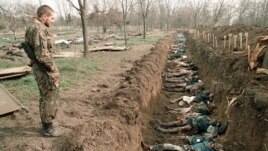
This photo -- showing a Russian soldiers inspecting bodies of civilians in a mass grave in Chechnya in 1995 -- was used by Russia's state-owned Channel One television to highlight recent Ukrainian suffering.This photo -- showing a Russian soldiers inspecting bodies of civilians in a mass grave in Chechnya in 1995 -- was used by Russia's state-owned Channel One television to highlight recent Ukrainian suffering.
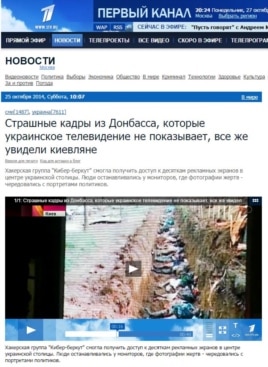
Aday before the October 26 parliamentary elections in Ukraine, hackers accessed electronic billboards in Kyiv and broadcast gruesome images of what they portrayed as civilian carnage wrought by Ukrainian forces battling pro-Russian separatists in the east of the country.
Russian state-owned Channel One television then aired a report on the stunt, describing the photographs as “horrifying images of the events in Donbas,” a reference to the Donetsk and Luhansk areas where separatists control of swaths of land.
At least one of these images, however, pre-dates the Ukraine conflict by nearly two decades. It originally showed a Russian soldier standing over mass graves of civilians in Chechnya in 1995 during Russia's own bloody battle with separatists in the restive North Caucasus republic.
The image was snapped by photographer Alexander Nemenov on March 31, 1995, at an Orthodox cemetery in Chechnya's capital, Grozny, according tothe AFP photo archive. The bodies were those of civilians "killed in winter fighting" that were "exhumed for identification," according to AFP.
The soldier was cropped out of the image broadcast October 25 on the Kyiv billboards. Only the dozens of decaying bodies sprawled out in a shallow ditch were shown from the original photograph.
A capture of the Russian Channel One report, in which the Russian troop seen in the original photo (above) has been cropped out.A capture of the Russian Channel One report, in which the Russian troop seen in the original photo (above) has been cropped out.
A group calling itself "Cyber Berkut" took credit for the billboard cyberattack.
It was not the first time that disturbing images of violence in the North Caucasus have been passed off as evidence of atrocities by Ukraine’s government in the conflict.
In May, state-owned Russian broadcaster Rossiya-1used video material aired 18 months earlier in a report on an antiterrorist operation in the Russian republic of Kabardino-Balkaria. The footage was used to suggest that Kyiv forces murdered a civilian to intimidate separatists in the Donetsk region.
Kremlin-appointed media boss Dmitry Kiselyov later called the broadcast "an error" but "in no way a manipulation." He said that "young, nymph video technicians" were responsible.
Footage of the hijacked electronic billboards aired by Channel One included the image of the mass grave in Chechnya.
The hackers’ montage flashed other photographs of the dead and maimed as well, alternating these images with headshots of Ukrainian politicians, including Prime Minister Arseniy Yatsenyuk, whose People’s Front Party was running neck and neck with President Petro Poroshenko's bloc to win the election, according to partial results as of October 27.
Each politician’s photograph in the video was embossed with a red stamp reading, "War Criminal."
The United Nations has accused both the Ukrainian government and pro-Russian separatists of abuses in the seven-month-old conflict, while rights group like Amnesty International charge that both sides have engaged in torture, shelling of civilian areas, and summary executions.
John Dalhuisen, the Europe and Central Asia director at Amnesty, singled out the Russian media last week for its reporting on atrocities, saying that "some of the more shocking cases" it has reported "have been hugely exaggerated."
Cyber Berkut takes its name from the disbanded Berkut riot-police force, which has been implicated in the February killing of 100 protesters in Kyiv during street protests against then-President Viktor Yanukovych.
The group claimed responsibility for cyberattacks on NATO websites earlier this year.
-- Carl Schreck

Montag, 18. August 2014

SPIEGEL ONLINE
18. August 2014, 16:18 Uh


Rebellen prahlen mit russischer Verstärkung
Aus Donezk berichtet Christian Neef
 Das Banana, ein kubanisches Restaurant mit dem Porträt von Che Guevara im Wappen, ist fest in der Hand der Rebellen. Sie fahren in beschlagnahmten Mercedes und umgespritzten Geländewagen mit abgedunkelten Scheiben vor. …
Separatisten bekommen Verstärkung aus Russland
Die Rebellen hätten "einige Dutzend" Einheiten neuer Panzertechnik erhalten und tausend Mann Verstärkung, die in russischen Lagern in einem viermonatigen Kurs ausgebildet worden seien. ... Der Separatistenführer meldete, dass 40 Militärfahrzeuge der ukrainischen Armee vernichtet worden seien und drei Flugzeuge. Und dann bestätigte er, was der Kommandeur des "Donbass"-Bataillons gesagt hatte: dass Russland die Truppen der Volksrepublik "im entscheidenden Moment" nicht im Stich lasse. Wörtlich sagte er: "Und jetzt möchte ich euch noch schnell eine wirklich gute Nachricht mitteilen: Wir bekommen eine große Verstärkung - bis zu 150 Stück Militärtechnik, davon bis zu 30 Panzer, der Rest sind Panzerwagen. Außerdem 1200 Mann, die in den letzten Monaten auf dem Territorium Russlands ausgebildet wurden."
Die Aussage von der russischen Hilfe hatte er am Freitag auf einer Sitzung seiner Regierung getan, das Fernsehen "Neurusslands" - die Station der Rebellen - hatte den Auftritt mitgeschnitten. Er liegt als Video vor. Moskau versucht also weiter, die Welt für dumm zu verkaufen.
Dass die Separatisten ohne russische Hilfe schnell in Not geraten würden, belegt auch eine andere Aussage. Sie stammt von Fjodor Beresin, dem stellvertretenden Verteidigungsminister der Donezker Volksrepublik. "Zum Teufel noch mal, rundherum sitzen die Leute und trinken Bier, niemand will kämpfen", hatte der in einem Interview gesagt. Und dann präzisiert: "Ich meine die, die zu Hause auf dem Sofa sitzen. Die Zivilisten, die ihr Land nicht verteidigen wollen. Die ukrainische Armee schießt auf die Stadt, die Leute fallen - und all das, weil die Donezker Männer nicht an die Front gehen wollen."

Das beschreibt die Stimmung hier in Donezk ziemlich genau - für die Separatisten wollen sich nur wenige engagieren.
konwój, Ukraina
Entre tots els dubtes de si els condutors del convoi humanitari rus són militars vestits d'uniforme beige a l'estil de nens exploradors, si són voluntaris o ho fan perquè els han pagat "bé" com han declarat alguns a periodistes estrangers, la pintura de camuflatge sota la blanca, en aquesta foto es veu clarament que l'escorta un vehicle amb la sigla ВАИ que significa "Inspecció d'automòvils militar", que només escorta convois militars... Seguim dubtant? Perquè les autoritats russes mai no diuen mentides?
En la foto a continuació, també s'observa un ВАИ, també va en direcció a Ucraïna
войска

Sonntag, 17. August 2014

Putin’s Business


Виталий Портников / Vitàliy Pòrtnikov15.08.2014


Виталий Портников. Фото А.Карпюк/Грани.Ру
Выступая на встрече с депутатами Государственной думы в Ялте, президент России Владимир Путин заявил, что продовольственные антисанкции направлены не столько против западных стран, сколько на поддержку отечественного производителя. Вечером этого же дня стало известно имя этого производителя - Госрезерв. Именно отсюда вице-премьер Аркадий Дворкович намерен черпать недостающие россиянам продукты.
Одновременно российское правительство собирается отказаться от запрета на товары для аллергиков и диабетиков - оказалось, что могущественный отечественный производитель просто не имеет возможности обеспечить людей, страдающих этими заболеваниями, а в Госрезерве продуктов для аллергиков не предусмотрено. Поскольку Госрезерев - он ведь для войны, а не для сумасшествия в мирное время.

Владимир Путин с его пищевыми указами все больше походит на унтер-офицерскую вдову. Вначале он на протяжении почти 15 лет создавал экономику, занятую исключительно обменом нефтедолларов на товары, - и когда окончательно разрушил все, что могло производить хоть что-то непохожее на нефть, решил от этих товаров отказаться. Причем то, как это было сделано - стремительно, без учета мнения и особенностей регионов, без консультаций с мнимыми друзьями по Таможенному союзу, - продемонстрировало еще одну особенность путинского режима - некомпетентность, возведенную в доблесть. Из власти так долго и так упорно вымывали профессионалов, что она превратилась в достояние людей, в принципе неспособных умножить два на два и получить правильный ответ.
Ну скажите, даже если вы задумали отомстить европейцам, разве вы не можете вначале просчитать реальные последствия для продовольственного рынка и подсчитать, какой процент отечественных производителей сидит на импортном сырье? Разве вы не можете получить справку, которая убедит вас, что без поставок семян загнется зерноводство, а без мальков - рыбная промышленность? Разве в вашей стране нет министерства здравоохранения, которое объяснит вам, сколько пациентов - аллергиков и диабетиков - зависит от импортных продуктов, от безлактозного молока, соевых йогуртов и прочих предметов жизненной необходимости?
Разве нужно быть семи пядей во лбу, чтобы понять последствия продовольственных антисанкций для отделенной от России государственными границами Калининградской области, которую Путин автоматически превратил в регион социальной напряженности? Разве неясно, что без согласования санкций со странами Таможенного союза - и в отсутствие таможенных границ с Беларусью и Казахстаном - запрещенные товары просто становятся достоянием контрабандистов? И если соответствующие службы готовят для президента указ, который он бездумно подписывает, то чем кроме некомпетентности можно объяснить принимаемые решения?
Впрочем, я знаю чем: жадностью. Путин стоит во главе чиновничьей камарильи, которая своего не упустит. И для этой камарильи запрещать значит жить. Можно представить себе, какие возможности откроются для новых взяток от тех, кто будет получать разрешение на ввоз запрещенного. Как контрабандисты, поставляющие на российский рынок товары "из Беларуси", будут разделяться на преступников, отлавливаемых смельчаками из "Молодой гвардии "Единой России" и прочих объединений подрастающих упырей, - и героев невидимого фронта, снабжающих рынок всем необходимым втридорога и заносящих часть прибыли в Кремль и Белый дом.
Нет, Путин все же не унтер-офицерский вдовец. Он блестящий гешефтмахер. Что для русского смерть, для Путина бизнес. И учить российского президента уму-разуму все равно что учить бизнесу старика из старого еврейского анекдота о двух нищих, "делающих коммерцию" на церковной паперти. То, чему Путин действительно научился за годы своего президентства, так это делать коммерцию. И очень может быть, что антисанкции, над которыми сегодня не потешается только ленивый, помогут сказочно разбогатеть еще каким-нибудь президентским друзьям.
А россияне переживут и без харчей. Им не привыкать. 
En la seva al·locució davant els parlamentaris de la Duma Estatal Russa a Ialta (Crimea), el president rus Vladimir Putin va dir que el sentit de les sancions en el sector d'aliments, més que castigar els països occidentals, anaven dirigides a donar suport als productors nacionals. A la tarda del mateix hom es va assabentar del nom d'aquell productor: l'Agència Federal de Reserves de l'Estat. És aquí d'on sortiran els productes que falten als russos.

Al mateix temps, el govern rus té la intenció de renunciar a la prohibició dels productes per a les persones al·lèrgiques i diabètiques - ha resultat que el potent productor nacional simplement no té la capacitat d'oferir a les persones que pateixen d'aquestes malalties, i les reserves de l'Estat no tenen previstos productes per a les persones al·lèrgiques. És que les reserves són per a la guerra, i no pas per a bogeries en èpoques de pau.
Vladímir Putin, amb els seus decrets alimentaris, es fa cada vegada més semblant a la vídua d'un suboficial (un personatge de Gògol, qui es va queixar sobre haver estat fuetejada per la policia i s'hi va contestar que s'havia fuetejat ella mateixa). Al començament, durant gairebé 15 anys Putin va estar creant una economia que es dedicava gairebé exclusivament a bescanviar petrodòlars per mercaderies, i quan havia destruït definitivament tot allò que era capaç de produir alguna cosa que no sigui petroli, va decidir renunciar a aquestes mercaderies. A més a més, la forma de fer-ho - ràpida, sense prendre en compte les opinions i les particularitats de les regions, sense consultar els suposats amics de la Unió Duanera - ha fet palesa una altra característica del règim de Putin - una incompetència erigida en virtut. El poder ha repel·lit professionals durant tant de temps i amb tanta insistència que s'ha convertit en un domini de la gent que en principi és incapaç de multiplicar dos per dos i obtenir-ne la resposta correcta.
Que em diguin, fins i tot si s'ha pretès venjar-se dels europeus, no era possible calcular abans les conseqüències reals per al mercat d'aliments i calcular quin percentatge dels productors nacionals tenen com a la seva base matèries primeres importades? No era possible obtenir una consulta que els convencés que sense subministrament de llavors el cultiu de cereals se'n-aniria al calaix, i sense fresa, ho faria la indústria pesquera? No hi existeix al país un Ministeri de Salut que pugui explicar quants pacients diabètics i al·lèrgics depenen de productes de importació, de la llet sense lactosa, iogurt de soja, i altres coses de necessitat vital?
...


No és evident que, sense coordinar les sancions amb els països de la Unió Duanera - sense existir fronteres duaneres amb Bielorússia i Kazakhstan - els productes prohibits simplement passaran a ser domini dels contrabandistes? I si els serveis competents preparen un decret per al president, qui el signa sense pensar, tret de la incompetència, hi ha cap cosa que pugui explicar les decisions preses?
No obstant això, jo sé què pot explicar-les: l'avarícia. Putin és el cap d'una camarilla burocràtica, que mai no deixarà anar el seu benefici. I per a aquesta camarilla, prohibir significa viure. Hom pot imaginar quines oportunitats s'obriran per aquells qui es deixaran subornar per emetre un permís d'importació per mercaderies prohibides. Com els contrabandistes que subministrin al mercat rus mercaderies "de Bielorússia" es dividiran en criminals a qui faran caça valents activistes joves del partit de Putin "Rússia Unida" i d'altres agrupacions de vampirs creixents, i en "herois del front invisible", qui proveiran el mercat amb tot el necessari a un preu exorbitant, reservant una part del benefici per compartir-lo amb la gent interessada al Kremlin i al parlament.
No, Putin no es dels qui s'autocastiguen com aquella vídua del suboficial. Ell és un gesheftmaher (paraula yidish per persones astutes per fer negocis) brillant. Allò que és mortal per a Rússia, pot ser un negoci per a Putin. El que Putin realment ha après durant els anys de la seva presidència, és a fer negocis. I pot resultar amb molta probabilitat que les contra-sancions, de les que no se'n riuen només els mandrosos, permetin que alguns amics del president es facin fabulosament rics.


I els russos sabran sobreviure la mancança d'aliments. No és la primera vegada.
 21 комментарий 
 Обсудить
Van <http://grani.ru/opinion/portnikov/m.232078.html>


Donnerstag, 14. August 2014


Paul Roderick Gregory, Forbes Contributor
I cover domestic and world economics from a free-market perspective
Follow (261)       
|

 
8/14/2014 @ 12:13DU |1 075 views
Russian 'Humanitarian' Convoy Goes Eye To Eye With Ukrainian Tanks

 
                 Comment Now 
Follow Comments
       
 
AP reports that the convoy of Russian trucks has resumed their trek towards an unguarded border point crossing into Ukraine, after spending the night in the southern Russian city of Voronezh. The International Committee of the Red Cross (ICRC) reports that no agreement for the convoy to cross into Ukraine has been reached, although negotiations are underway. Thus yesterday's tense war of nerves continues today as Ukraine and Russia teeter on the brink of a direct confrontation.
Events escalated yesterday near the Ukrainian border towards a confrontation reminiscent of the high seas encounter between U.S. warships and Soviet freighters carrying cargo for a Cuba armed with nuclear missiles in 1962. A crossing of the Russian convoy of 280 military trucks into Ukraine through a rebel-controlled check point could have marked the start of the Russian invasion predicted by the NATO supreme commander. UN Ambassador, Samantha Power, had already warned Russia on the floor of the General Assembly not to use humanitarian aid as an excuse to invade Ukraine. Russia came close, but it halted the convoy at the Russian city of Voronezh, several hundred kilometers from the Ukrainian border.
Secretary of State, Dean Rusk, stated to President Kennedy as the Soviet ships turned around: "We were eyeball to eyeball, and I think the other fellow blinked." Apparently Vladimir Putin is not ready for outright war right now. He blinked. Yesterday was not the time. He must bask in glory as he delivers a major address in Crimea scheduled for today. He does not need a war right now to spoil the mood. That is perhaps for later.
Confusion reigned throughout the tumultuous day as the humanitarian assistance "agreement" among Russia, Ukraine, and the International Committee of the Red Cross (ICRC) fell into tatters. As of August 12, it was already evident that the agreement announced by the Russian Foreign Ministry had not been agreed to either by the ICRC or the Ukrainian government. Among the many sticking points was Ukraine's insistence that Russian supplies be reloaded into Red Cross trucks, a condition the Russian Foreign Ministry rejected. As more holes in the "agreement" became apparent, the Russian side cried foul, excoriating Ukraine for reneging on its pledges of cooperation. As the rhetoric heated up, Europe and the United States warned Russia against any unilateral operations that put Russian military trucks on Ukrainian soil without permission of that sovereign nation. John Kerry even threatened to exclude Putin from the upcoming G20 meeting in an Australia still seething from the MH17 tragedy. He knows Putin likes to be included in the club.
In the fog of this bizarre "humanitarian war," rumors circulated that the 280 truck convoy of white-painted military KAMAZ trucks had been split into a legitimate relief column and military-supply contingent and that all or part of the convoy would cross shortly through rebel-controlled border points directly into rebel-controlled Luhansk. CNN along with other sources confirmed that the convoy had already proceeded past the Belgorodskoy border crossing, designated in the so-called agreement, towards unguarded crossings. The ICRC emphatically stated that it would not authorize any supplies transiting rebel-controlled border checkpoints.

Most alarmingly, social networks reported Ukrainian tanks moving towards the presumed crossing point of the Russian convoy. Ukraine and Russia stood "eyeball to eyeball."
Russian, Ukrainian, and ICRC negotiators reportedly returned to the negotiating table to determine if they can reach an agreement that would allow the Russian humanitarian assistance into the Luhansk and Donetsk provinces. Ukraine itself announced a massive humanitarian assistance operation that would commence on Friday.
The Russian humanitarian-assistance ploy is classic Vladimir Putin. It uses half truths and outright lies that the Russian public will not question, while a distracted West asks itself: Did the Red Cross actually sign on to this deal? Are the Ukrainians reneging on their agreement as Russia claims? Why all the political wrangling? Should not suffering people come before politics? All the while, Putin's foreign ministry screams to high heaven that the genocidal Ukrainians want innocent civilians to die for want of food and medicine because they hate all ethnic Russians.
We are left with Ukraine's anti-terrorist operation tightening the noose on pro-Russian forces in Donetsk and Luhansk, as the civilian population endures unimaginable hardship. We have 280 KAMAZ trucks loaded with humanitarian aid and who knows what else standing idle near the border. We do not know what Putin's near-term, medium-term, or long-term game plan is. He may just be improvising as he goes along. The one thing we know for sure is that he will not give up, and he cannot afford the complete defeat of his mercenaries in east Ukraine. He will continue to stir the pot, no matter what, even if it means the risk of outright war.
What does Putin hope to gain from his humanitarian war? At a minimum, he would like to embarrass Ukraine by focusing attention on the suffering of the civilian population in the war-ravaged Donbass. If Ukraine turns back his relief supplies, he could raise accusations of genocide as an eventual casus belli. If he could get his white KAMAZ trucks inside Ukraine, he could destroy a few with false-flag operations to accuse Ukrainian "extremists" of sabotaging the relief effort. The impasse with relief supplies could give Putin pause to again demand that the UN designate the Russian army as a UN-sanctioned peace keeping force to rescue the poor Ukrainian people.
I have only a few pieces of advice for Ukraine. Make sure you mount ASAP your own humanitarian relief convoy – no matter how scarce your resources. Make its movement from Kiev to Donetsk and Luhansk into a TV spectacular. Do not allow the Russian KAMAZ trucks to enter without inspection of contents no matter how long it takes, and make sure that the trucks are driven to their destination by neutral drivers, not by enough Russian military specialists to form an entire motorized infantry battalion, as Ukrainian military analysts have calculated based on the 280 truck convoy.
Above all, make sure the world understands one basic point: The people of east Ukraine are suffering death and misery because of Vladimir Putin and his steadfast support of the rebels with mercenaries and weapons. As one Ukrainian nationalist put it: "How can you take humanitarian aid from a country that destroys our country?" Interestingly, the Russian foreign minister made an important slip on this very point, when he stated that: "We have already signaled to them (the separatists). I am certain there will be no disruptions on their part." And I thought that Putin does not control the separatists!
Mr. Putin's humanitarian convoy is the equivalent of an arsonist who asks to be let through police lines carrying a bucket of water to douse the fire he set.

 
                 Comment Now 
Follow Comments
          

Sonntag, 11. Mai 2014

La ignorància del reconquistador de Crimea

El president rus Putin en una entrevista va afirmar que Crimea i Novorússia conquistats per l'emperatriu Catalina no tenien res a veure amb Ucraïna i li van ser "regalats" als anys 1920, "Deu sap per quina raó", i la península, l'any 1954.
Potser, pensa que el nom Novorússia donat per la monarca és un argument contundent que demostra el suposat caràcter rus d'aquells territoris.
La veritat és que als territoris conquistats l'imperialisme rus afavoria l'emigració de la població tàrtara i promovia la immigració de russos, posant els ucraïnesos en condicions desfavorables.
Malgrat això, la persecució de l'ucraïnès i una forta russificació, segons el cens de població del 1897, les províncies entraven al segle XX amb la següent composició lingüística de la població (milers):
                                                    Ucraïnesos               Russos            
Tauris (hi-inclosa Crimea)             611,1  404,5   
Kherson 1.462,4 575,4
Ekaterinoslav 1.456,4 364,9

En total, en la regió els ucraïnesos feien un 56,1 i els russos, 21,4 per cent de la població.
Tot i això, per als polítics russos es tracta d'un territori originalment russos.

Donnerstag, 27. März 2014

Крымские высоты и предательство Путина

Los altos de Crimea y la traición de Putin
Marzo 18, 16:47
 Vitaly PORTNYKOV
La anexión de Crimea es una traición de las más groseras ...
Desde pequeño he escuchado en la televisión y en la radio, he leído en periódicos y panfletos de propaganda sobre cómo el incendiario de guerra en el Medio Oriente - la camarilla militarista israelí - anexiona territorios extranjeros, sin respeto alguno al derecho internacional. Uno de los temas favoritos de la propaganda soviética siempre eran los Altos del Golan, el territorio de Siria, que cayó bajo el control de Israel después de la Guerra de los Seis Días en 1967 y se convirtió en una parte del territorio del Estado de Israel en 1981.

Justamente los Altos del Golán han sido siempre la prueba más obvia de la "agresión " israelí para los propagandistas, primero soviéticos y luego rusos: ¿cómo puede ser , que se anexen territorios extranjeros a plena luz del día y, además, ¡instalando algo allí! El Ministerio de Relaciones Exteriores soviético y su sucesor ruso han gastado montañas de papel para denunciar al agresor que ha violado el sancta sanctorum del derecho internacional. Para Rusia, los Altos del Golan han quedado para siempre como el territorio ocupado que debe, tarde o temprano, volver a estar bajo la soberanía siria.

Ahora tratemos de entender en qué se diferencian los Altos del Golán de Crimea. ¿Crimea es tierra ancestral de rusos? Pues, los historiadores israelíes le contarán que los judios habían aparecido en el Golán mucho antes que los rusos en Crimea: un par de milenios atrás. ¿Crimea es un regalo de Jruschov? Bueno, los Altos del Golan también son un regalo británico a Francia, que violando sus obligaciones internacionales transfirió el territorio bajo su mandato y privó a los judíos de la posibilidad de que organizaran allí su hogar nacional. ¿Crimea es de importancia estratégica para Rusia? Por favor, ¡los Altos del Golán son para Israel mucho más importantes! La Flota del Mar Negro es un montón de chatarra en un lago. En cambio, desde los Altos del Golán se puede bombardear la mitad de Israel y era lo que hacían los sirios hasta la Guerra de los Seis Días. ¿En Crimea viven rusos y no tiene nada que ver con Ucrania? Pues, en los Altos de Golán ahora la gran mayoría de la población son judios, que no quieren a Siria. ¿Y alguien ha preguntado algo a la población originaria de los Altos del Golán, los drusos? ¿Y alguien ha preguntado algo a los tártaros de Crimea? También son la población originaria de la península y antes de la primera ocupación rusa de Crimea conformaban la mayoría abrumadora, hasta un 80-90 por ciento.

En resumen, se puede trazar una gran cantidad de paralelismos que demuestren que Rusia hace en Crimea exactamente lo mismo de lo que viene acusando a Israel desde hace varias décadas, sólo con un cínismo especial. Este cinismo consiste en que Israel se defendía en los Altos del Golán y Rusia agredía en la guerra de Crimea. Desde los Altos del Golán, Israel fue bombardeado durante décadas y sufría ataques terroristas, y a Crimea siempre han viajado rusos como si fuera su casa, descansaban, compraban inmuebles, ni hablar de la base militar rusa. Israel estaba en guerra con Siria desde el primer día de su independencia. Ucrania no ha estado en guerra con Rusia nunca.

Es por eso que la anexión de los Altos del Golán - independientemente de cómo se trate desde el punto de vista del derecho internacional - en lenguaje común, fue un acto de autodefensa. Pero la anexión de Crimea - diga lo que diga Putin y su séquito sobre la "gloria eterna" [de la marina rusa, Sebástopol] - es la traición más grosera que se puede dar, una que no tiene ninguna excusa.

Por cierto, nadie en Moscú busca excusas. Y no tengo ninguna duda de que pronto vamos a ver de nuevo una nota de la diplomacia rusa, reprendiendo a Israel por su ocupación de los Altos del Golán.


Крымские высоты и предательство Путина

18 марта, 16:47


61

Я рекомендую
1,3 т.
Аннексия Крыма - самое обыкновенное предательство...
С самого детства я слышал по телевизору и радио, читал в газетах и пропагандистских брошюрах о том, как поджигатель войны на Ближнем Востоке – израильская военщина – захватывает чужие территории, не считаясь с международным правом. Одной из любимых тем советской пропаганды всегда были Голанские высоты – территория Сирии, перешедшая под израильский контроль после Шестидневной войны 1967 года и ставшая частью территории Государства Израиль в 1981 году.
Именно Голаны всегда были самым очевидным для советских, а затем и российских пропагандистов доказательством израильской "агрессивности" – как же это так, средь бела дня аннексировать чужую территорию, да еще что-то там обустраивать! Советский МИД и его российский правопреемник извели горы бумаги для обличения агрессора, нарушающего святая святых международного права. Для России Голаны навсегда остались оккупированной территорией, которая должна рано или поздно вернуться под сирийский суверенитет.
Теперь давайте попытаемся понять, чем Голаны отличаются от Крыма. Крым – исконно русская земля? Но израильские историки расскажут вам, что евреи на Голанах появились гораздо раньше, чем русские в Крыму – этак на пару тысячелетий. Крым – подарок Хрущева? Так и Голаны – британский подарок Франции, которая в нарушение собственных международных обязательств передала свою подмандатную территорию и лишила евреев возможности обустраивать здесь национальный очаг. Крым стратегически важен для России? Ну уж, простите, Голаны для Израиля куда важнее! Черноморский флот – груда металлолома в озере. А с Голан можно обстреливать половину Израиля, чем сирийцы до Шестидневной войны и занимались. В Крыму живут русские, и к Украине он никакого отношения не имеет? Так и на Голанах сейчас подавляющее большинство населения – евреи, они в Сирию не хотят. А исконное население Голан – друзы, вы у них спросили? А вы спросили у крымских татар? Они тоже исконное население полуострова, и до первой российской оккупации Крыма составляли подавляющее – до 80-90 процентов – большинство.
Словом, можно проводить огромное множество параллелей, которые продемонстрируют, что Россия в Крыму делает именно то, в чем она несколько десятилетий кряду обвиняла Израиль, – только с особым цинизмом. Цинизм этот состоит в том, что Израиль на Голанах защищался, а Россия в Крыму нападает. С Голанских высот десятилетиями обстреливался Израиль и осуществлялись террористические вылазки, а в Крым россияне всегда ездили как к себе домой, отдыхали, покупали недвижимость – о российской военной базе я уже не говорю. Израиль воевал с Сирией с первого дня провозглашения своей независимости. Украина не воевала с Россией никогда.
Именно поэтому аннексия Голанских высот – как бы ни относиться к ней с точки зрения международного права – самая обыкновенная самозащита. А аннексия Крыма – что бы там Путин и его окружение ни рассказывали о "вечной славе" – самое обыкновенное предательство, которому нет оправданий.
Впрочем, в Москве никто оправданий и не ищет. И у меня нет ни малейшего сомнения, что вскоре мы вновь увидим ноту российского дипломатического ведомства, укоряющего Израиль за оккупацию Голанских высот.